
In many rural development projects, success is often measured by what is built. A protected spring. A road. A water tank. A sanitation facility. New equipment for a small business. These things matter, and they change lives. But experience has shown us that infrastructure alone is never enough.
What truly determines whether a project lasts is not the structure itself, but the people who use it, care for it, and take responsibility for it long after external support has ended.
Infrastructure solves problems. Ownership sustains solutions.
Across rural communities, countless well-intentioned projects have failed not because the technology was wrong, but because communities were never fully empowered to manage and maintain what was provided. A water source breaks down and no one knows who should fix it. A sanitation facility falls into disuse. Equipment sits idle once a project ends.
At CORE, we have learned that lasting impact happens when communities are not just beneficiaries, but active partners from the very beginning.
Water systems that communities can manage themselves
Access to safe and clean water transforms health, productivity, and dignity. But water facilities only remain functional when communities understand how they work and are organized to maintain them.
That is why water interventions go hand in hand with community engagement. From spring protection to rainwater harvesting and water detention ponds, communities are involved in planning, construction, and ongoing management. Water User Committees are formed to take responsibility for maintenance, conflict resolution, and long-term care of the facilities.
When people know that a water source belongs to them, it is protected, repaired, and respected.
Health and hygiene start with dignity and participation
Improving health and hygiene is not only about infrastructure or supplies. It is about knowledge, habits, and dignity.
Simple, practical interventions such as training schoolgirls to make reusable sanitary towels or supporting households with hand-washing facilities become effective when communities understand their value and take ownership of the practices. These approaches respect local realities while empowering people to improve their own health outcomes.
When communities are involved, behavior change becomes possible, and improvements last.
Livelihoods grow stronger when people control their own progress
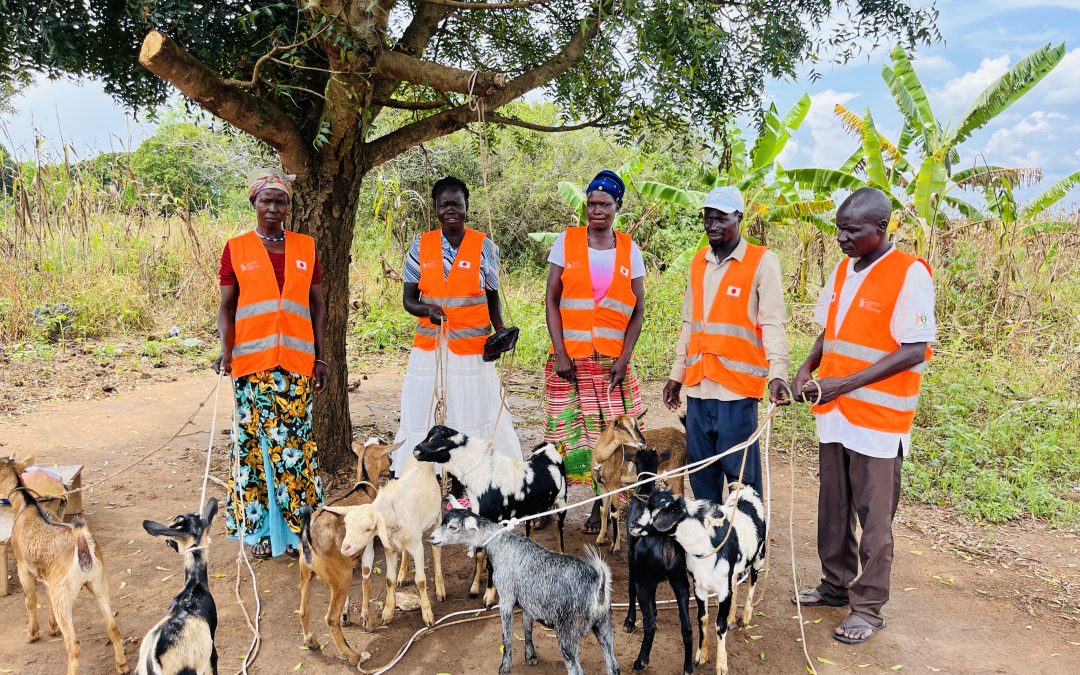
Livelihood support is most effective when it goes beyond short-term assistance. Providing equipment for income-generating activities creates opportunity, but long-term impact comes from skills, organization, and financial confidence.
By combining start-up support with financial literacy training and encouraging group structures such as savings associations and cooperatives, communities are better able to manage resources, plan for the future, and grow together. Ownership builds resilience, and resilience creates lasting change.
Development that lasts is built with people, not for them
Sustainable development is not delivered. It is built together.
When communities are involved in decisions, trained in practical skills, and trusted to manage their own resources, projects do not end when funding cycles close. They continue to grow, adapt, and serve future generations.
At CORE, community ownership is not an add-on. It is the foundation. Because beyond infrastructure, it is people who make development last.